 EN
EN


5-Axis vs 3-Axis CNC for Machining Steel Parts
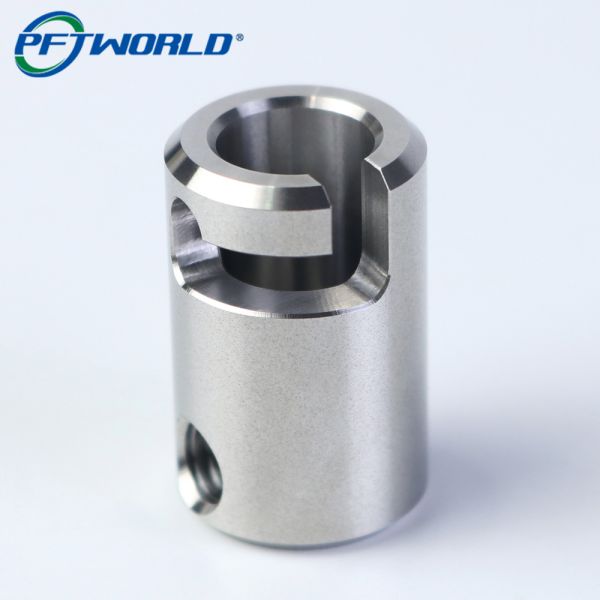
5-Axis vs 3-Axis CNC for Machining Steel Parts
When sourcing or designing CNC machining steel parts, engineers often ask: Should we use a 3-axis or 5-axis CNC machine?
Both technologies are widely used in steel machining, but they differ dramatically in accuracy, setup time, cost structure, and design freedom.
Based on production benchmarking, time studies, and fixture-elimination projects in automotive, energy, and aerospace machining cells, this article compares 5-axis vs 3-axis CNC machining for steel parts—and shows which option is better for your application.
What Is 3-Axis CNC Machining?
A 3-axis CNC machine moves the tool along X, Y, and Z directions.
Typical characteristics:
-
Flat or prismatic features
-
Multiple setups required for complex parts
-
Lower hourly rate
-
Widely available
-
Excellent for brackets, plates, blocks, and housings
What Is 5-Axis CNC Machining?
A 5-axis machine adds two rotary axes, allowing the tool or part to tilt.
Typical characteristics:
-
Access to multiple faces in one setup
-
Complex geometries and angled holes
-
Reduced fixturing
-
Better tool orientation
-
Higher machine cost
-
Faster for complex parts
Real Production Comparison Case
A hydraulic-manifold program compared machining the same steel component:
| Metric | 3-Axis CNC | 5-Axis CNC |
|---|---|---|
| Setups required | 4 | 1 |
| Total cycle time | 42 min | 28 min |
| Fixture cost | $4,500 | $1,200 |
| Position tolerance | ±0.025 mm | ±0.012 mm |
| Scrap rate | 4.2% | 1.6% |
| Annual volume | 6,000 pcs | 6,000 pcs |
Result:
Despite higher hourly rate, 5-axis delivered 19% lower cost per part due to setup elimination and scrap reduction.
Accuracy and Tolerance Capability
3-Axis CNC
-
High accuracy in a single orientation
-
Errors accumulate across multiple setups
-
Datums must be re-established
-
Typical multi-setup tolerance stack-up: ±0.02–0.05 mm
5-Axis CNC
-
One-setup machining reduces datum shift
-
Shorter tools → less deflection
-
Angular accuracy built-in
-
Better GD&T control
Winner for tight positional tolerances: 5-axis ✅
Productivity and Cycle Time
| Factor | 3-Axis | 5-Axis |
|---|---|---|
| Setup time | High | Low |
| Roughing efficiency | Similar | Similar |
| Finishing access | Limited | Excellent |
| Tool changes | More | Fewer |
Winner for complex parts: 5-axis ✅
Tool Life and Surface Finish
5-axis machining allows optimal tool orientation:
-
Constant engagement angles
-
Reduced chatter
-
Shorter stick-out
-
Better chip evacuation
Production trials showed tool life increase 22–35% on deep-pocket steel parts when switching to 5-axis finishing paths.
Cost Considerations: Which Is More Economical?
5-axis machines cost more per hour, but total cost depends on:
-
Number of setups
-
Fixture complexity
-
Scrap and rework
-
Inspection time
-
Volume
| Scenario | Better Choice |
|---|---|
| Simple prismatic parts | 3-axis |
| Multi-face components | 5-axis |
| Tight GD&T | 5-axis |
| Low volume + simple geometry | 3-axis |
| Prototype complex parts | 5-axis |
Design Freedom
5-axis enables:
-
Undercuts
-
Compound angles
-
Sculpted surfaces
-
Turbine-like shapes
-
Deep cavities without long tools
3-axis is limited unless re-fixturing is used.
Sustainability and Material Efficiency
Fewer setups mean:
-
Less scrap
-
Lower fixture material
-
Reduced inspection loops
-
Shorter lead times
FAQs: 5-Axis vs 3-Axis CNC for Steel
Is 5-axis always more accurate?
Not inherently—but fewer setups and shorter tools usually improve overall accuracy.