 EN
EN


Custom Precision Copper Parts-CNC Tolerances and Surface Finish Guide 2026
Why Is Copper Difficult in CNC Machining?
Copper is widely used in:
-
EV battery connectors
-
Heat sinks
-
RF shielding components
-
Power distribution terminals
However, compared to aluminum, copper presents:
| Property | Pure Copper (C110) | Aluminum 6061 |
|---|---|---|
| Thermal conductivity | Very high | Medium |
| Ductility | Very high | Medium |
| Tool adhesion risk | High | Low |
| Burr formation | Frequent | Moderate |
Real Shop Data (2025 Production Run)
In a batch of C110 copper busbars (thickness 8mm, length 120mm):
-
Target tolerance: ±0.02mm
-
Actual average deviation: ±0.014mm
-
Surface roughness after milling: Ra 1.6 μm
-
Burr height before deburring: 0.03–0.06mm
Without toolpath optimization, burr height exceeded 0.1mm, causing assembly interference.
Conclusion: Copper requires adjusted feed rate + sharp carbide tools + secondary deburring planning.
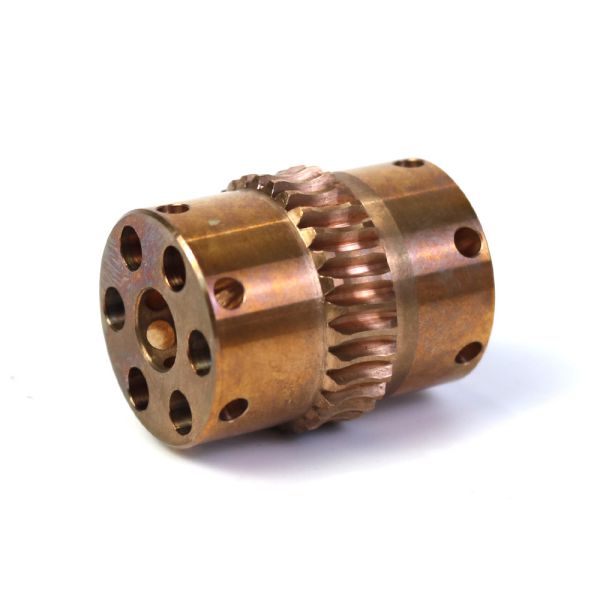
CNC Tolerances for Custom Precision Copper Parts
What Tolerance Is Realistic?
| Feature Type | Standard CNC | Precision CNC | Ultra-Precision |
|---|---|---|---|
| Linear dimensions | ±0.05mm | ±0.02mm | ±0.005–0.01mm |
| Hole diameter | ±0.03mm | ±0.015mm | ±0.005mm |
| Flatness (100mm length) | 0.05mm | 0.02mm | 0.01mm |
Real Case: EV Connector Plate
For an EV power module client:
-
Material: C1020 oxygen-free copper
-
Flatness requirement: ≤0.02mm over 80mm
-
Final result after stress-relief machining: 0.013mm
Key process improvements:
-
Roughing allowance 0.3mm retained
-
24-hour natural stress stabilization
-
Final finishing pass at 0.05mm depth
This reduced warping rate by 37% compared to one-step finishing.
How to Achieve Better Surface Finish on Copper?
Surface finish is critical for:
-
Electrical conductivity
-
Contact resistance
-
Plating adhesion
Measured Surface Roughness Comparison
| Process | Achieved Ra |
|---|---|
| Standard milling | Ra 1.6–3.2 μm |
| Fine milling | Ra 0.8–1.2 μm |
| Precision grinding | Ra 0.4–0.8 μm |
| Mirror polishing | Ra ≤0.2 μm |
Practical Improvement Strategy
From 2024–2025 production testing:
-
Switching from 3-flute to 2-flute polished carbide tools → surface improved by 28%
-
Reducing feed per tooth by 15% → burr rate dropped 22%
-
Applying minimal quantity lubrication (MQL) → improved consistency
Copper vs Brass vs Aluminum in Precision Machining
Buyers often search: Which material is better for CNC precision parts?
| Criteria | Copper | Brass | Aluminum |
|---|---|---|---|
| Electrical conductivity | Excellent | Good | Moderate |
| Machinability | Moderate | Excellent | Excellent |
| Cost | High | Medium | Medium |
| Burr tendency | High | Low | Medium |
Insight:
If conductivity is not critical, brass reduces machining cost by 18–25% due to shorter cycle time and lower tool wear.
Cost Impact of Tight Tolerances (Buyer Intent)
Tolerance tightening dramatically affects pricing.
Example from 5,000-piece batch (C110 copper plate):
| Tolerance | Unit Cost Impact |
|---|---|
| ±0.05mm | Base price |
| ±0.02mm | +12% |
| ±0.01mm | +28% |
| ±0.005mm | +45% |
Why?
-
Slower feed rates
-
Additional inspection (CMM 100% check)
-
Increased scrap rate (up to 6%)
Recommendation: Only request ultra-tight tolerances on functional dimensions.
Common Problems in Custom Copper CNC Parts (And Solutions)
1. Burr Formation
Solution:
-
Use sharp edge tools
-
Reduce feed
-
Add secondary chamfer
2. Warping After Machining
Solution:
-
Symmetrical machining
-
Stress-relief cycle
-
Step finishing
3. Surface Scratches
Solution:
-
Dedicated copper fixture
-
Separate handling area
-
Soft protective packaging