 EN
EN


AL6082 Anodized Sensor Housings: Bore, Pocket and Thread Control
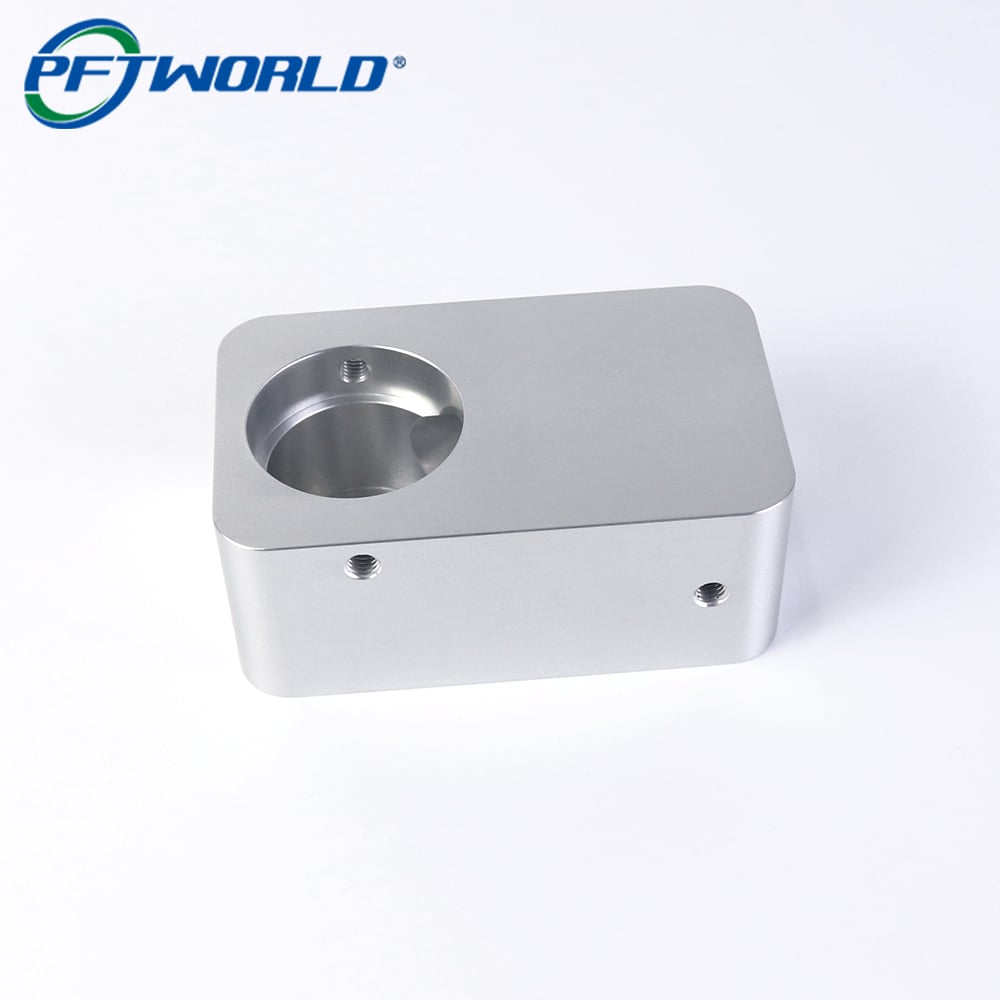
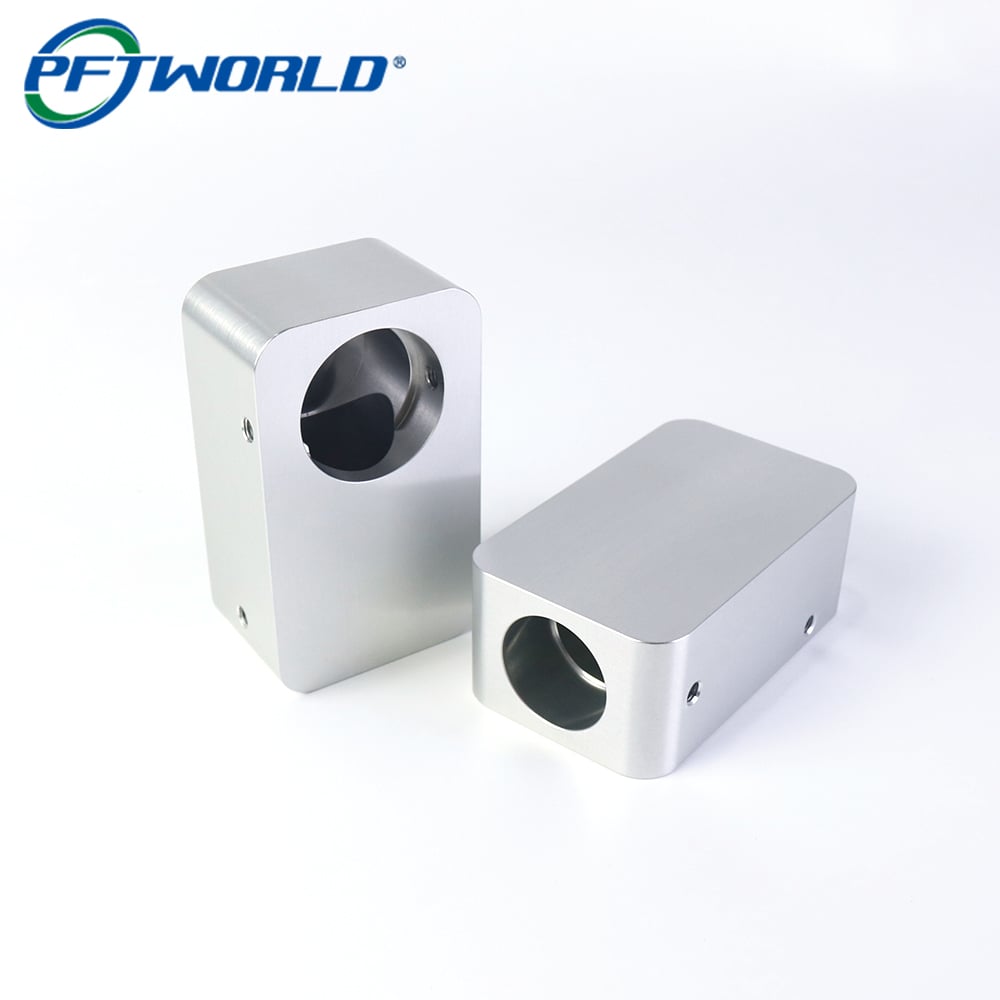
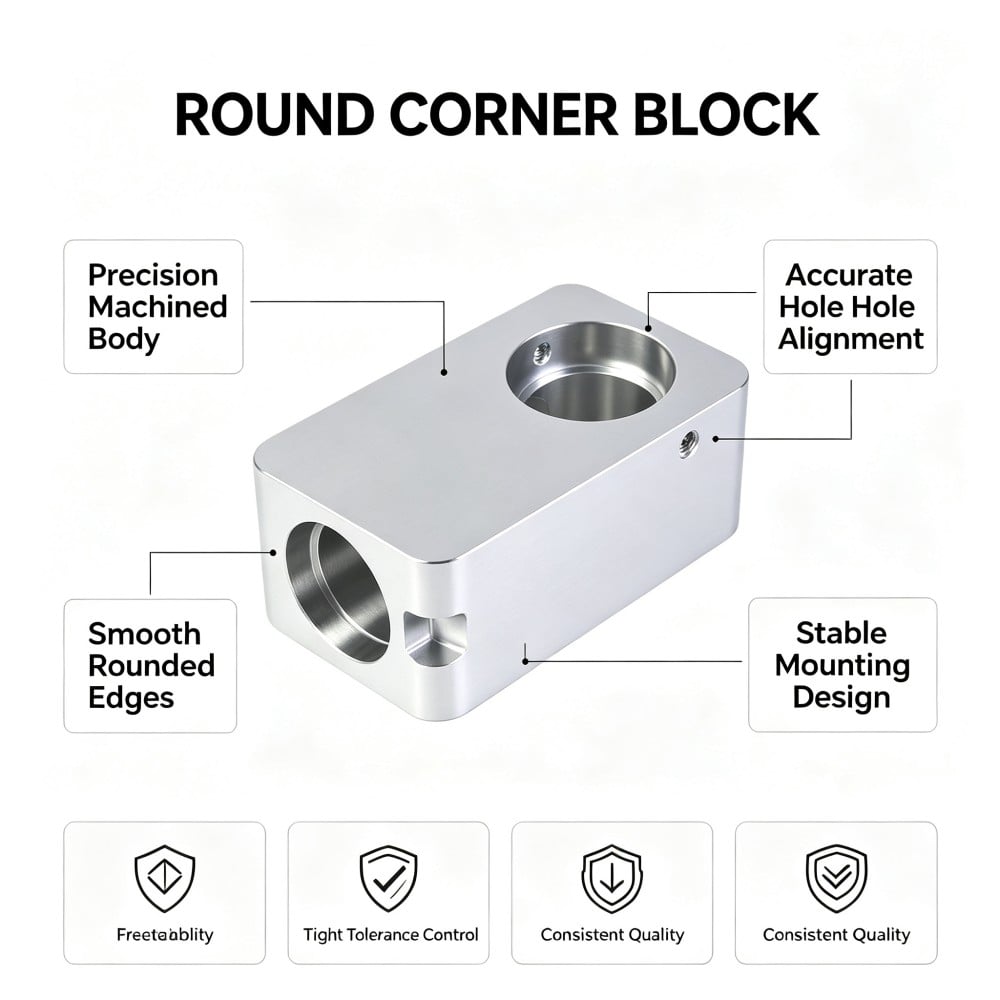
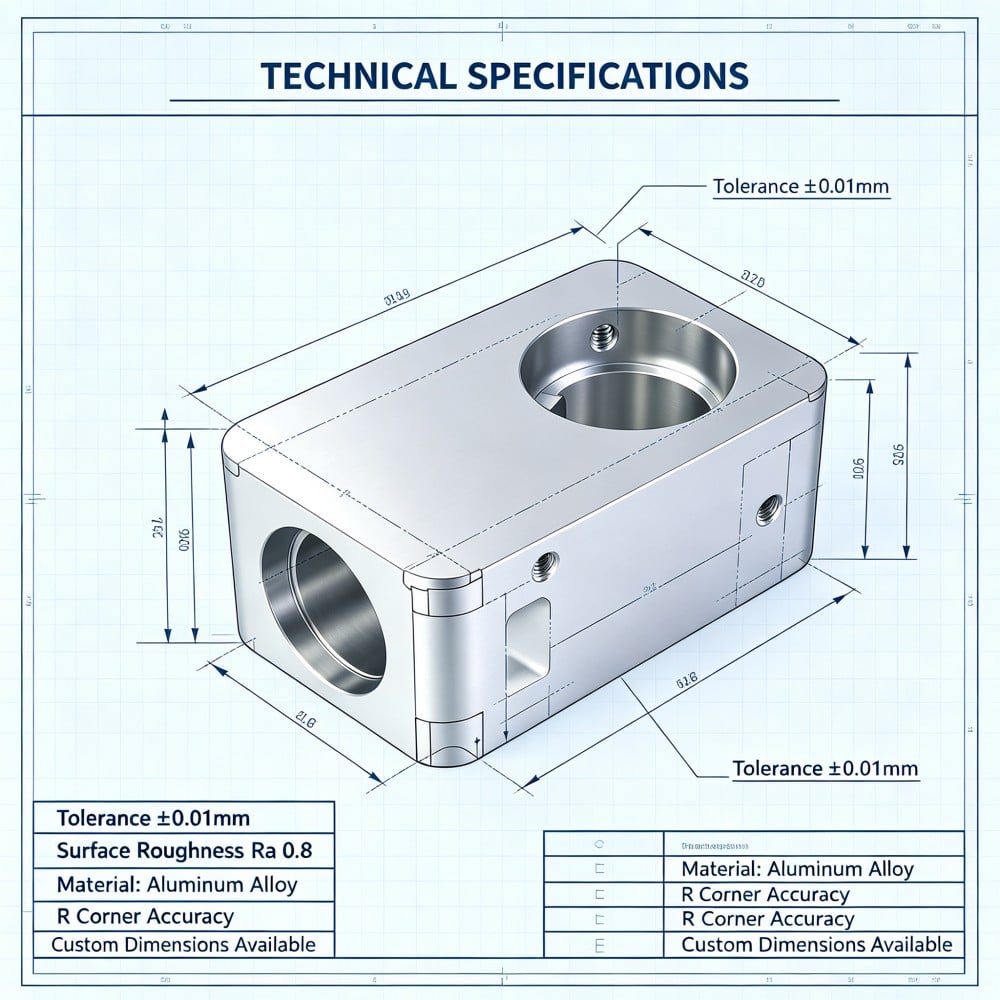
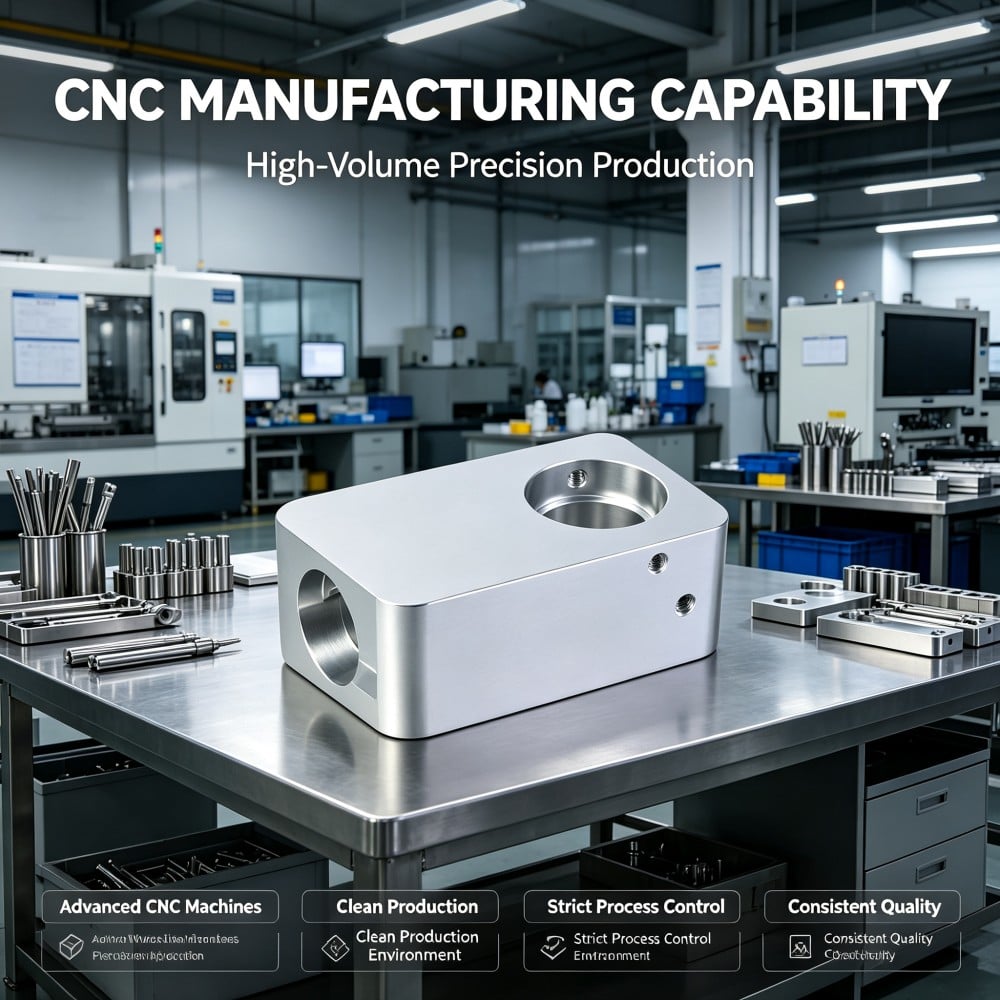
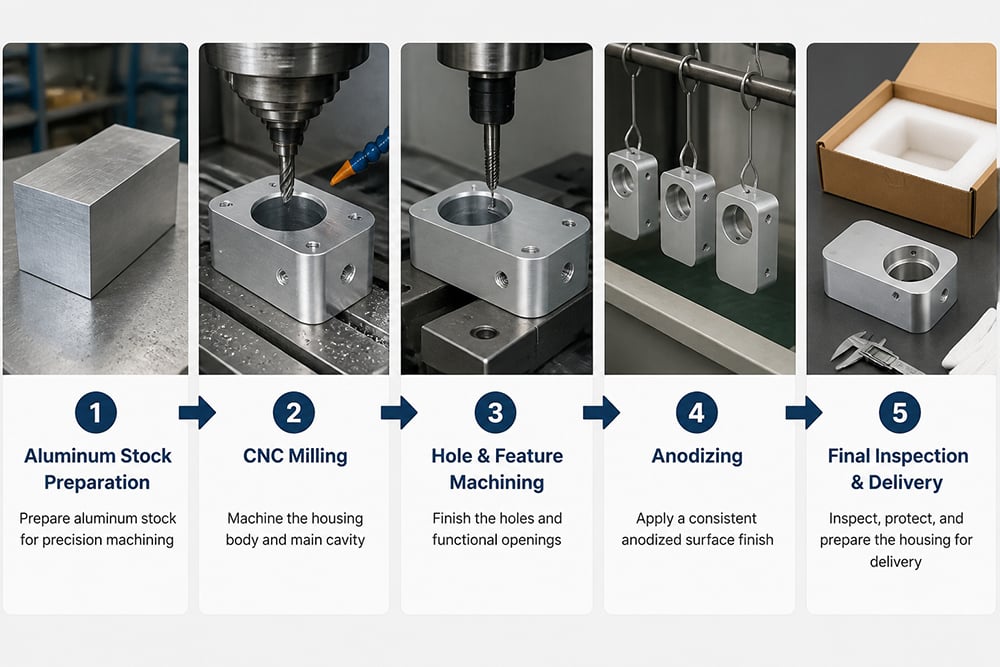
Nathan Cole designs optical inspection units in Canada. His housing block — 95 × 52 × 40 mm in AL6082 — carries a Ø40 mm stepped pocket with a D-shaped keying relief cut into its floor, two tapped holes on the pocket shoulder, four tapped mounting holes on the side faces, and a Ø20 mm end bore that meets the cavity at 90 degrees. Clear anodized, bead blasted. Five hundred pieces. Two features on that drawing fought each other, and the fix for each one is worth knowing before you quote a job like it.
Contradiction one: an anodize layer on a datum floor
The pocket floor locates a lens element, so its depth sits inside ±0.05 mm. Clear anodize grows the surface by 10–12 µm per face, which eats a fifth of that tolerance before the part ever ships — and it grows unevenly on a bead-blasted surface.
·We machined the pocket floor 0.012 mm shallow so the coating lands the surface on nominal.
·Bead blasting was specified at 150-mesh glass bead, applied before anodizing only, to keep the growth predictable.
·Threads were masked with silicone plugs; an anodized thread kills a 6H fit.
Contradiction two: reaching the keyed floor
The D-flat sits 25 mm deep in a Ø40 mm pocket. A cutter long enough to reach it deflects; a cutter stiff enough not to deflect cannot clear the wall.
·Roughing used a Ø12 mm three-flute cutter to relieve the bulk, leaving 0.3 mm.
·Finishing switched to a Ø8 mm stub cutter at 0.08 mm radial engagement, one continuous helical pass, so the wall and floor were cut in the same rotation with no tool change between them.
·The D-flat was then milled in the same setup, keyed off the pocket bore itself rather than an outside edge.
What we shipped
| Check | Spec | Measured (500 pcs) |
| Pocket bore Ø40 | H8 | within H8, Cpk 1.5 |
| Pocket depth | 25 ±0.05 mm | 24.99–25.03 mm |
| D-flat position | ±0.05 mm | within ±0.04 mm |
| Side threads | M6 × 1, 6H | 100% plug gauge |
| End bore Ø20 | H7 | within H7 |
| Anodize thickness | 10–12 µm | 10.5–11.6 µm |
Result
All 500 housings passed incoming inspection, and the first assembled unit held the lens element square without shimming. Nathan's close-out note: "The pocket floor checked dead on and the threads took screws without a fight. Nothing needed reworking — that has not been our experience with anodized housings." A second order for 1,200 housings, with a mirrored port layout, followed in December 2025.
Three notes for anyone specifying an anodized housing
· If a coated face is a datum, tell your machinist the coating thickness — the compensation has to be cut into the metal, not argued about later.
· Keep deep-pocket finishing cuts in one continuous rotation; tool changes mid-wall are where taper starts.
· Mask threads or plan for a chasing operation. Anodize does not forgive a 6H fit.