 EN


Precision CNC Machined Gear Shafts: Engineering Guide & FAQ
Precision CNC Machined Gear Shafts: Engineering Guide & FAQ
Design factors, tolerances, and material insights for high-torque gear shaft applications — by PFTWORLD precision manufacturing.
Overview
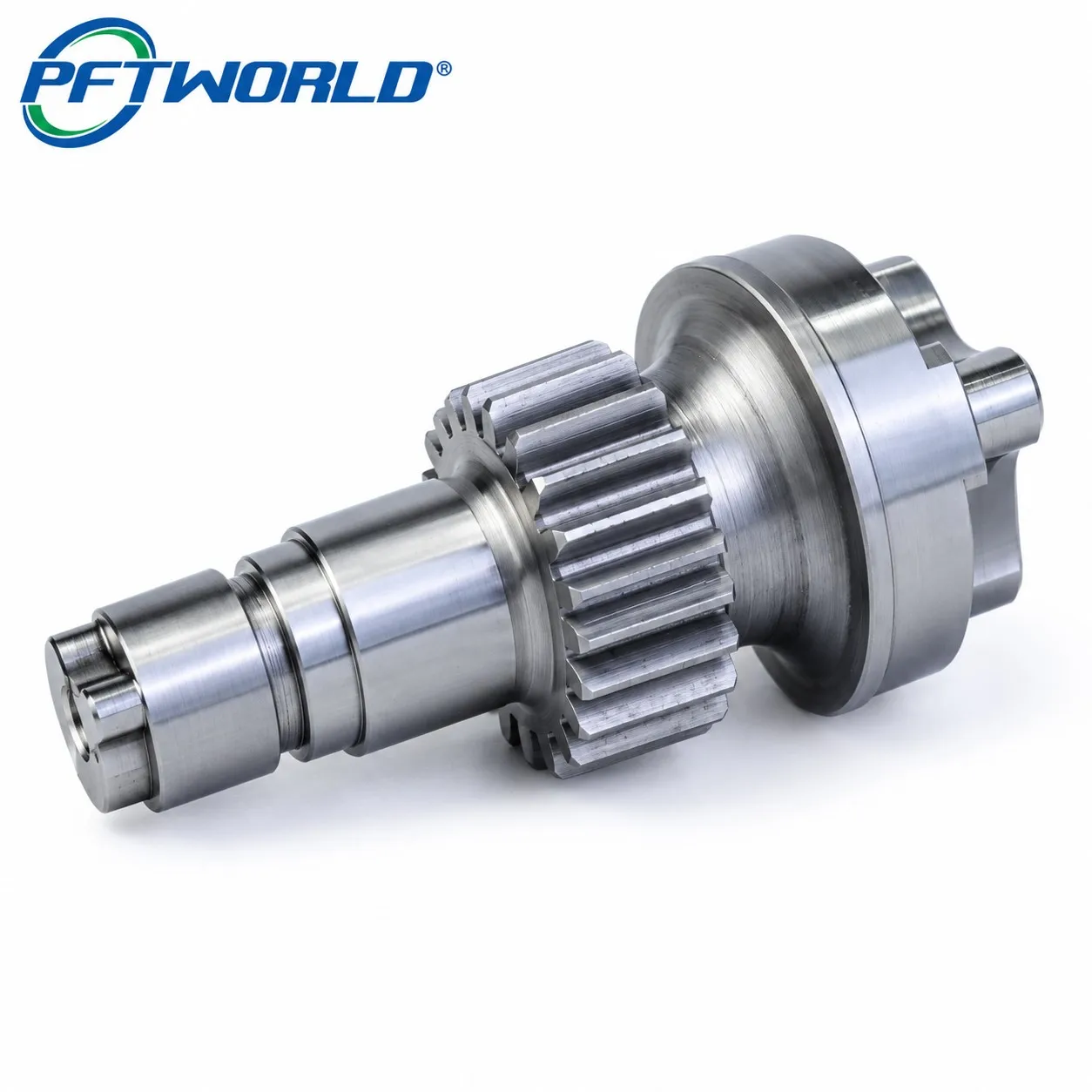
Precision CNC gear shafts combine high-tolerance machining with robust material selection to ensure smooth torque transmission and long service life. This guide covers key design factors, common tolerances, and answers to frequent engineering questions about gear shaft manufacturing.
Key Specifications
Engineering Insight
Gear shaft performance depends on concentricity, spline accuracy, and heat-treatment control. Single-setup CNC turning-milling combined with gear hobbing minimizes stack-up error between shaft and gear, ensuring consistent tooth profile and alignment for low-noise, high-load operation.
Frequently Asked Questions
What tolerance can CNC gear shafts achieve?
Typically ±0.005mm on critical diameters, achieved through precision grinding after CNC turning-milling.
Which materials are best for gear shafts?
Alloy steels such as 20CrMnTi or 4140 are preferred, case-hardened for wear resistance and fatigue strength.
How is concentricity controlled during machining?
Single-setup CNC turning-milling reduces repositioning error, keeping shaft and gear teeth coaxial.
What surface finish is standard for gear shafts?
A ground finish of Ra 0.4-0.8μm is standard; sealing and bearing surfaces are further polished.
Need a Custom Precision Gear Shaft?
Contact the PFTWORLD engineering team for DFM review, tolerance analysis, and a tailored quotation.
Request a Quote