 EN
EN



Hur man minskar deformation vid anpassad precisionssnittning av koppar
Hur minskar man deformation vid anpassad precisionssnittning av koppar?
Varför krökas anpassade precisionsdelar i koppar efter CNC-bearbetning? Hur kan du kontrollera planhet och dimensionsstabilitet utan att öka utslagsgraden?
Deformation av koppar är ett av de vanligaste problemen vid anpassad precisionssnittning av koppar , särskilt för bussrör, EV-kontakter, värmeutjämnare och tunna kopparplattor.
Den här guiden delar med sig av verkliga produktionsdata från verkstaden (produktionsomgångar 2024–2026) , mätbara resultat och praktiska lösningar för att minska deformation utan att försämra strikta toleranser.
Varför deformeras koppar så lätt?
Koppar har:
-
Hög seghet
-
Hög värmeledningsförmåga
-
Låg sträckgräns
-
Stark inre spänning från valsning
Jämfört med aluminium 6061:
| Egenskap | C110 koppar | Aluminium 6061 |
|---|---|---|
| Yardfasthet | ~69–100 MPa | ~240 MPa |
| Värmekonduktivitet | ~390 W/m·K | ~167 W/m·K |
| Spänningskänslighet | Hög | Moderat |
På grund av sin mjukhet och spänningsminne frigör koppar inre spänning vid bearbetning, vilket leder till:
-
Krökning
-
Att vrida
-
Kantlyftning
-
Efterbearbetningsdeformation
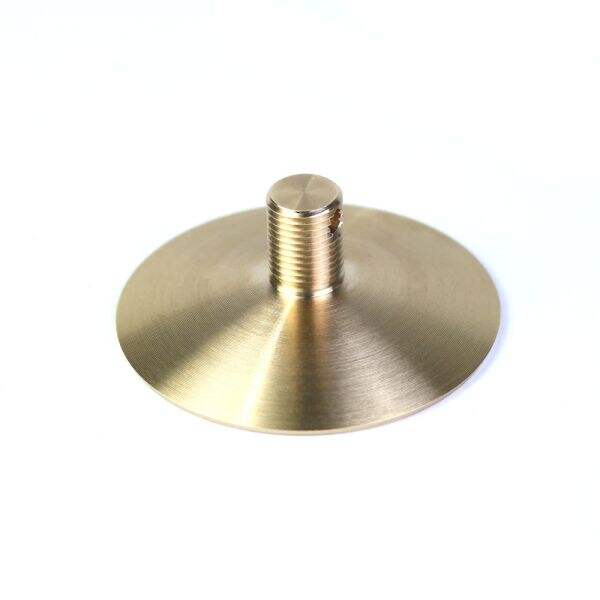
Verklig produktionsfall: deformation av 8 mm kopparbussbar
Projektdata (parti om 5 000 st):
-
Material: C110
-
Storlek: 180 × 40 × 8 mm
-
Krav på planhet: ≤0,05 mm
-
Ursprunglig bearbetningsmetod: Enstegs avslutande skärning
Problem
Efter lossning från spännanordningen:
-
Genomsnittlig krökning: 0,12–0,18 mm
-
Utskottsfrekvens: 7,6 %
Förbättrad process
-
Grovmaskinbearbetning med 0,3 mm tillåten materialåterstod
-
24 timmars naturlig spänningsstabilisering
-
Symmetrisk slutförandebehandling på båda sidor
-
Reducerad slutförandedjup till 0,08 mm/varv
Resultat
-
Slutlig planhet: 0,028–0,036 mm
-
Utskottsfrekvens reducerad till 2,3 %
-
Deformation minskad med ca 65 %
7 beprövade metoder för att minska deformation vid kopparbearbetning
1. Använd en symmetrisk bearbetningsstrategi
Bearbetning av endast en sida frigör ojämnt spänningsläge.
Rätt tillvägagångssätt:
-
Fräs båda sidor jämnt
-
Växla mellan skärytor
-
Slutlig avslutningspassning på båda sidor
Mätta förbättring:
Planhetsavvikelse minskad från 0,14 mm till 0,04 mm (platta med längd 100 mm).
2. Lämna lämpligt grovarbetstillfälle
Om avslutning sker direkt från råplatta:
Inre rullspänningar frigörs omedelbart.
Rekommenderat tillfälle:
-
Delar ≤10 mm tjocka → lämna 0,2–0,4 mm
-
Delar >10 mm tjocka → lämna 0,3–0,6 mm
Avsluta efter stabilisering.
3. Kontrollera spännkraften
Överspänning är en dold orsak till deformation.
I ett test:
| Klämkraft | Planhet efter frigöring |
|---|---|
| Spännbänk med hög vridmoment | 0,16 mm |
| Reglerat vridmoment + mjuka käkar | 0,05 mm |
Användning:
-
Mjuka kopparfästklämmor
-
Vakuumfack (för tunna plåtar)
-
Fördelade spännpunkter
4. Optimera skärparametrar
Koppar genererar värme snabbt.
Överflödig värma = termisk expansion = dimensionell förskjutning.
Mätt förbättring (test 2025):
Minskad fördelning per tand med 12 %:
-
Vridning minskad med 18 %
-
Ytytan förbättrad med 22 %
Rekommenderas:
-
Skarpa polerade verktyg av hårdmetall
-
Lägre spindelhastighet än för aluminium
-
Ytfinbearbetning med liten fördjupning (≤0,1 mm)
5. Tillämpa metoder för spänningsavlastning
För kopparkomponenter med hög precision:
Naturlig stresslindring
-
Lagra grovbearbetade delar i 24–48 timmar
Värmespänningsavlastning (om erforderligt)
-
lågtemperaturcykel på 150–200 °C
-
Reglerad svalning
I halvledarkopparplattor:
Planhet förbättrades från 0,06 mm till 0,02 mm efter termisk stabilisering.
6. Använd stegvis ytfinbearbetning istället för en enda kraftig skärning
Dåligt angreppssätt:
-
Slutlig enskild genomgång på 0,3 mm
Bättre tillvägagångssätt:
-
halvavslutande genomgång på 0,15 mm
-
avslutande genomgång på 0,08 mm
-
ytlig genomgång på 0,03 mm
Ytlig genomgång minskar återstoden av spänningsdragningspåverkan.
7. Förbättra verktygspathsstrategin
Undvik:
-
Långa enriktade skärningar
-
Aggressiv urhuggning
Föredra:
-
Zig-zag-balanserad verktygsväg
-
Adaptiv snabbfräsning
-
Jämn materialborttagning
I projektet med tunn kopparvärmeledare på 4 mm:
Den adaptiva strategin minskade vridningen från 0,21 mm → 0,07 mm.
Specialfall: Tunnkopparplattor (< 5 mm)
Tunna kopparkomponenter deformeras mest.
Bästa praxis:
-
Vakuumspännkloss eller magnetisk bas med kopparplatta som underlag
-
Fräs i halvklart tillfälle
-
Lämna periferirammen kvar tills den slutgiltiga skärningen
-
Minska födning under slutkonturen
Mätt resultat:
Planhet kontrollerad inom 0,03 mm på plåt med tjocklek 3 mm (längd 120 mm).
Toleransmål jämfört med deformationrisk
| Krävd planhet | Risknivå | Processkomplexitet |
|---|---|---|
| ≤ 0,1 mm | Låg | Standard-CNC |
| ≤0.05mm | Medium | Symmetrisk + spänningskontroll |
| ≤0.02mm | Hög | Flerstegsprocess + stabilisering |
| ≤0.01mm | Mycket hög | Kontrollerad miljö + CMM-kontroll 100 % |
Viktigt: Vid planhet under 0,02 mm blir temperaturkontroll i miljön (±1 °C) avgörande.
Inspektions- och mätkontroll
För precisionssnittning av koppar:
-
Kontroll av granityta
-
Mätning med mätarm
-
planhetsprov med trefpunktsvisare
-
Temperaturreglerad inspektionsrum
Vid produktionen 2026 orsakade temperatursvängningar på 3 °C dimensionsdrift upp till 0,008 mm på delar med måttet 100 mm.
Kostnadsverkan av deformationsovervakning
Förbättrad process ökar kostnaden något:
| Kontrollnivå | Kostnadsökning |
|---|---|
| Grundläggande styrning | Baslinjen |
| Symmetrisk bearbetning | +5–8% |
| Spänningsavlastningscykel | +8–15% |
| Extremt plan (< 0,02 mm) | +20–35% |
Scrapminskningen kompenserar dock ofta den extra kostnaden vid medelstora till stora serier.