 EN
EN


Black Anodized 6061-T6 Housings: Four Thin Walls, Bore Fit Control
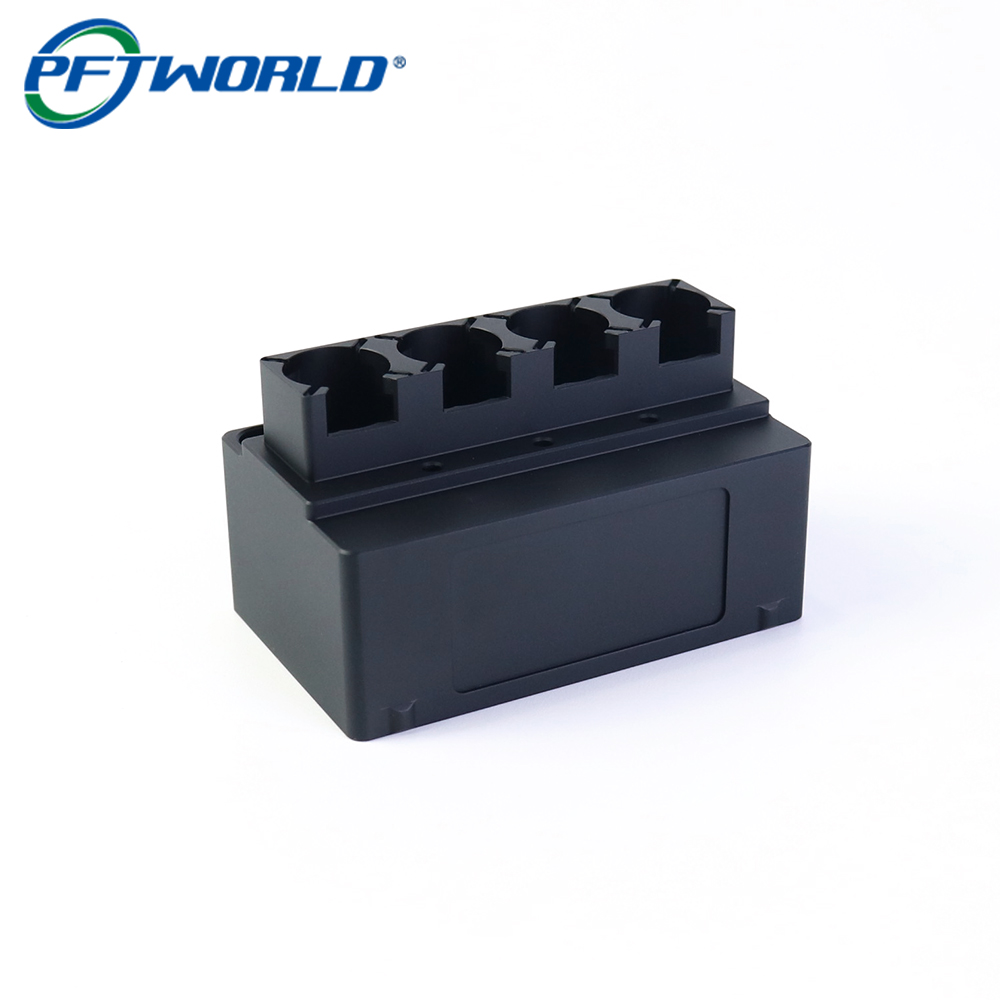
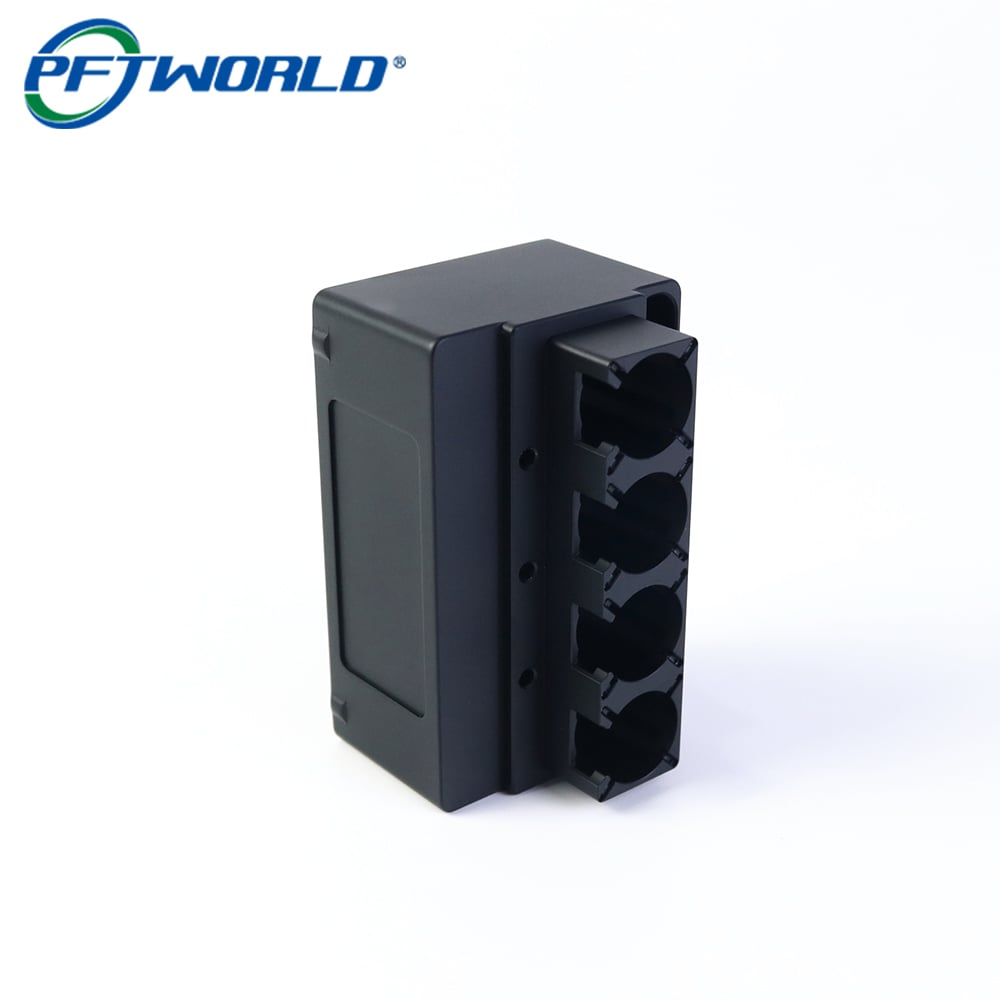
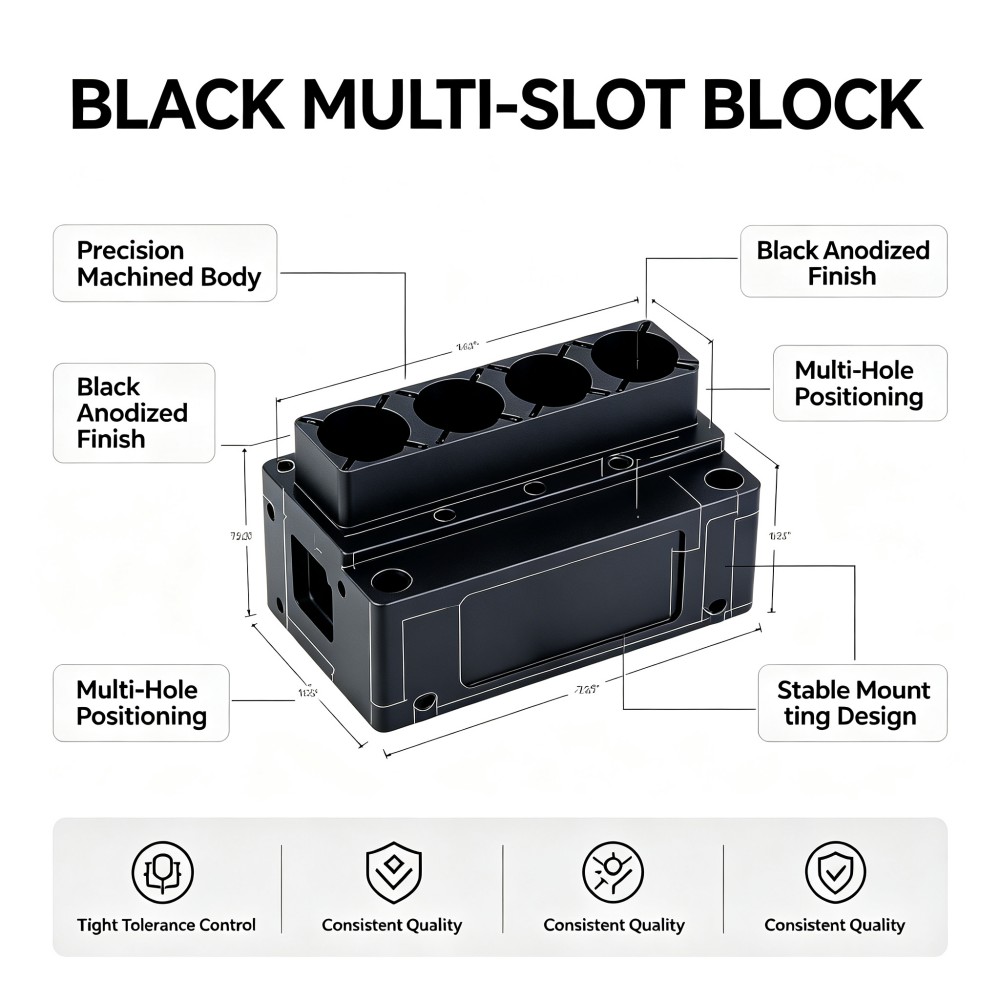
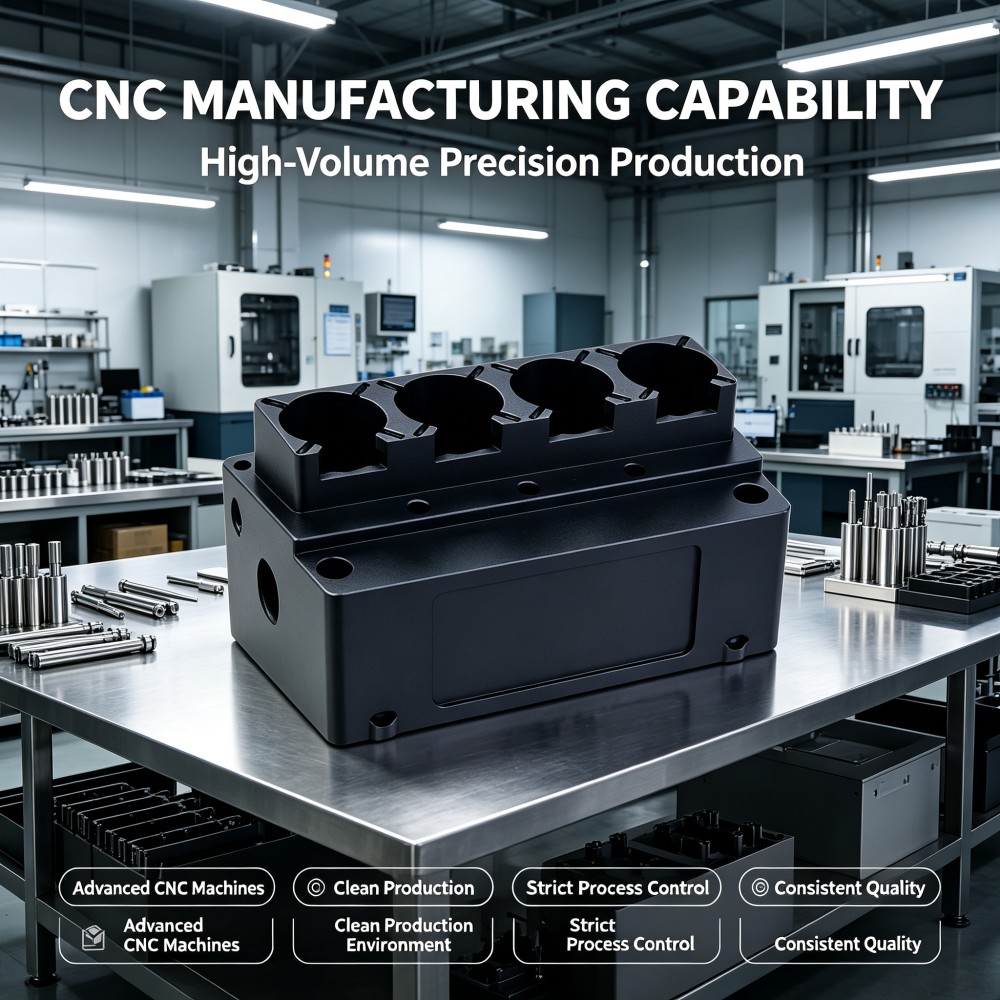
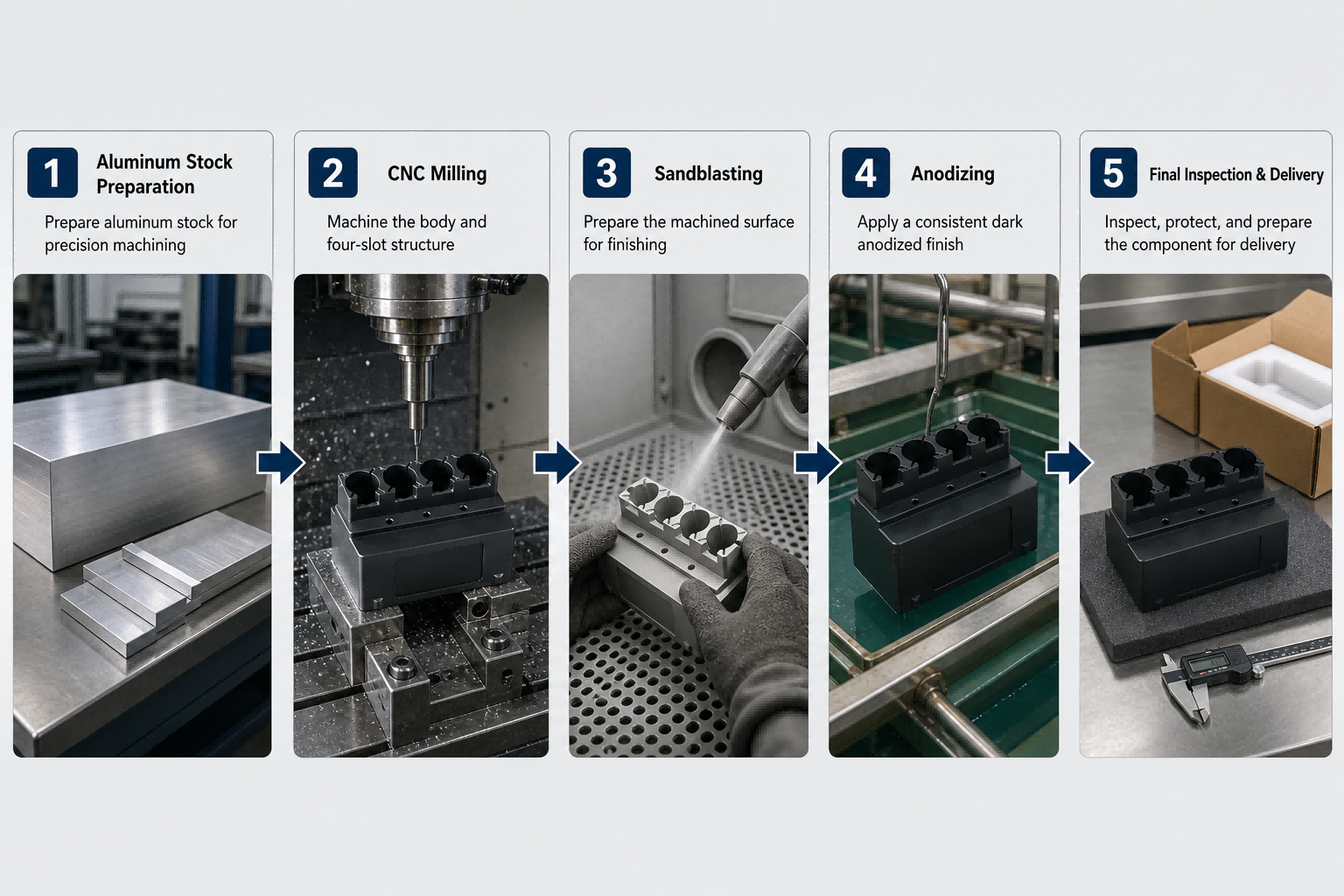
Quentin Marchand builds portable analysis instruments in Lyon. His new housing had to fit four cylindrical elements side by side inside one black anodized 6061-T6 block, 108 × 64 × 45 mm — four interconnected scalloped pockets with slots opening through the top edge, two deep side channels for wiring, a stepped ledge with four M3 tapped holes for the cover plate, and alignment notches on the bottom face. Six hundred pieces, bead blasted and Type II black anodized. Each of the three operations had one number that decided whether the housing worked.
Milling: 1.4 mm is the whole job
The webs between the four Ø18 mm pockets finish at 1.4 mm, and thin aluminum webs are where chatter lives.
·Roughing left 0.4 mm on every pocket wall so finishing removed stress evenly instead of peeling one wall at a time.
·Finishing ran a Ø6 mm three-flute cutter at 0.08 mm radial engagement, one continuous helical pass per pocket — no re-entry marks, no tool change mid-wall.
·The 32 mm deep side channels (5.3 × diameter, same cutter) were cut in 4 mm steps to stop the tool singing at the bottom.
·Webs measured 1.38–1.44 mm against 1.4 ±0.05 mm, Cpk 1.4.
Bead blasting: uniform matte or none at all
Black anodize hides nothing. Uneven blasting shows as a patchy finish once the dye goes on, and pressure alone can move a 1.4 mm web.
·Glass bead at 150 mesh, 0.35 MPa, 150 mm gun distance, overlapping passes to avoid banding.
·Pocket bores were protected; the H8 fit surface had to stay untouched.
·Every fifth housing was compared to a master sample under the same lighting before the batch went to the anodizing line.
Anodizing: the coating that shrinks a bore
Type II black anodize grows 10–12 µm per surface. On a Ø18 H8 bore that is about half the available clearance — enough to turn a sliding fit into a press fit.
·All four pockets were plugged with silicone masking, so the exteriors took the full coating and the bores took none.
·The M3 cover threads were masked as well, then checked with a 6H plug gauge.
·Coating measured 10.4–11.7 µm on 20 pieces per batch.
What we shipped
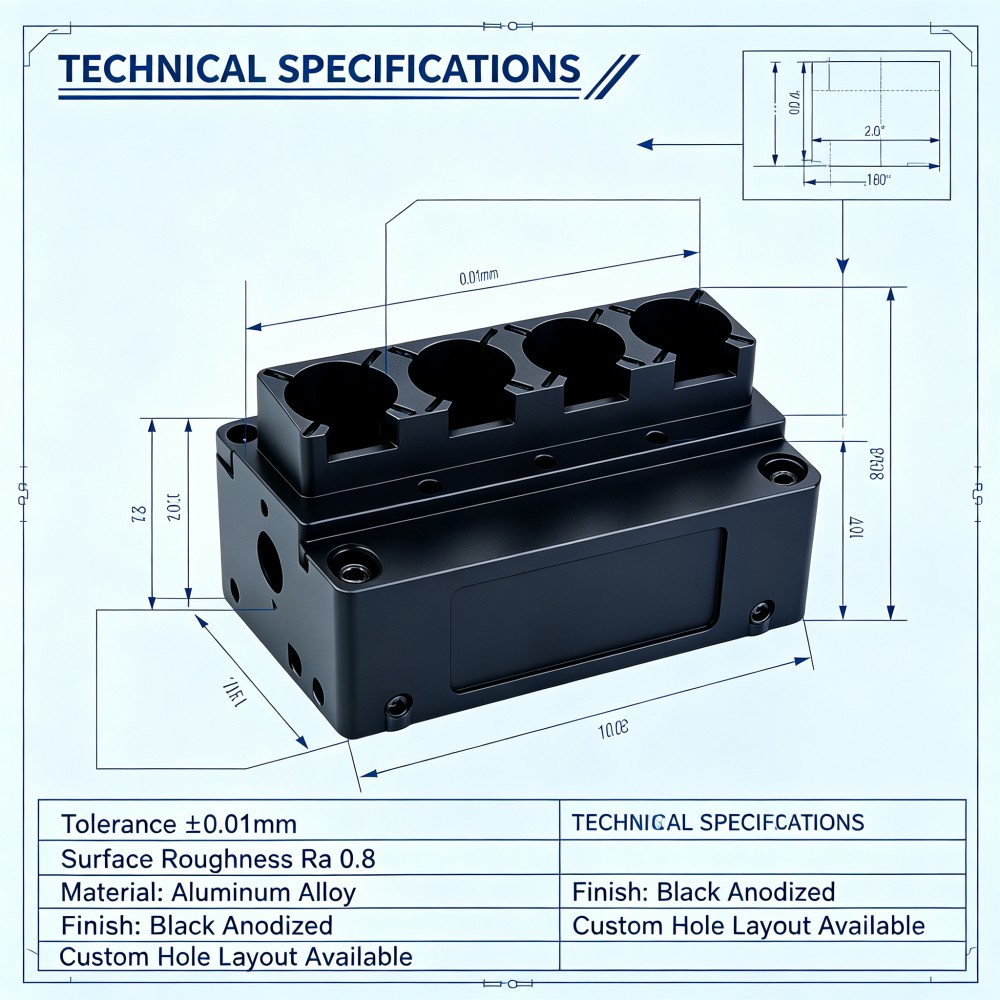
| Check | Spec | Measured (600 pcs) |
| Web thickness | 1.4 ±0.05 mm | 1.38–1.44 mm, Cpk 1.4 |
| Pocket bore Ø18 | H8 (masked) | within H8, no coating |
| Side channel depth | 32 ±0.1 mm | 31.96–32.05 mm |
| Cover threads | M3 × 0.5, 6H | 100% plug gauge |
| Anodize thickness | 10–12 µm | 10.4–11.7 µm |
| Finish uniformity | vs master sample | 100% pass |
Result
All 600 housings passed incoming inspection, and the assembly team seated the four elements by hand with no force and no reaming. Quentin's close-out note: "The pockets are clean, the finish is even on every face, and nothing needed rework before assembly. This is the first batch where the black finish showed no handling marks." A second order for 2,000 housings, with a fifth pocket added, followed in December 2025.
Three notes for anyone specifying a black anodized housing
·Decide early which surfaces take coating and which do not. Fit bores and threads are masked before anodizing, not rescued after.
·Ask for blast parameters in writing — uniform dye starts with uniform blasting.
·If walls finish under 2 mm, expect stock left on during roughing and one continuous finishing pass. It is slower, and it is the only way the webs hold.