 EN
EN


Why More Global Manufacturers Are Moving CNC Production to China in 2026
Why More Global Manufacturers Are Moving CNC Production to China in 2026
Global manufacturing trends in 2026 indicate a significant shift: more companies are relocating CNC production to China. This is not simply a cost-cutting measure; it’s a strategic decision driven by technology, supply chain efficiency, and quality reliability.
At 7 Swords, we have observed international clients from aerospace, medical, robotics, and automotive sectors increasingly consolidating CNC production with Chinese suppliers. The combination of advanced machinery, experienced engineers, and flexible production capacity has made China a preferred destination for precision components.
1. Advanced CNC Capabilities
China’s CNC industry has rapidly upgraded over the past decade:
- 5-axis and multi-axis machining centers
- High-speed milling machines
- Precision lathes for complex geometries
- Automation and robotic loading systems
Real Example: A European automation manufacturer switched a prototype run of aluminum brackets to a 5-axis Chinese supplier. Dimensional accuracy improved from ±0.03 mm to ±0.009 mm, and lead time was cut in half.
2. Competitive Pricing Without Compromising Quality
While cost reduction remains attractive, experienced buyers realize that quality and reliability are equally critical. Chinese CNC suppliers like 7 Swords combine:
- Skilled machinists with decades of experience
- Modern machine tools
- Rigorous quality control (CMM, laser measurement, surface inspection)
This ensures high-quality precision components at competitive prices.
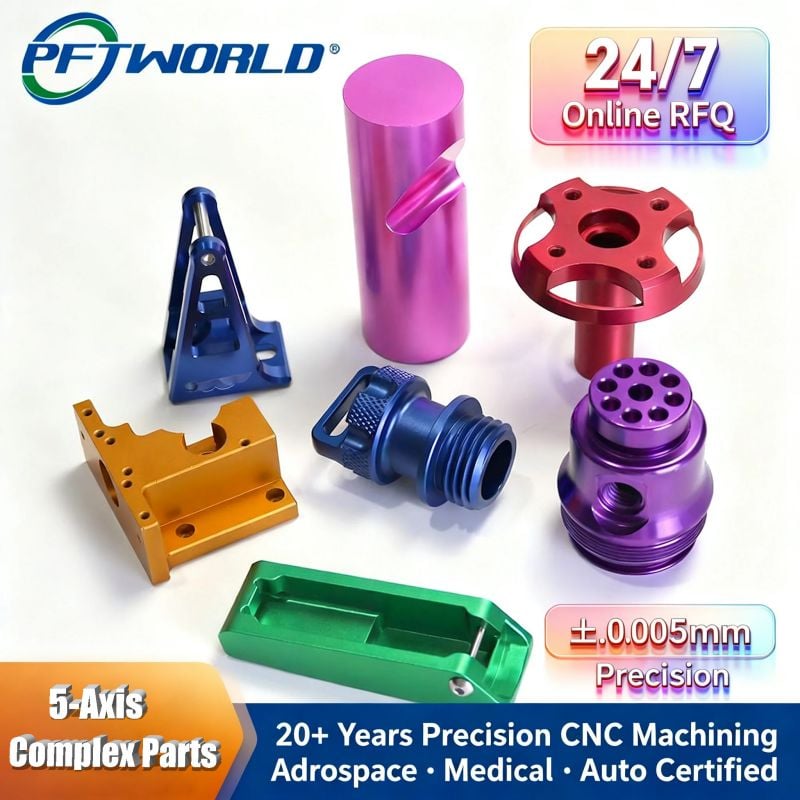
3. Flexible Production for Prototypes and Low-Volume Runs
Rapid prototyping and small batch production are increasingly important:
- Speed to market affects competitiveness
- Flexible production scheduling reduces delays
- Quick design revisions can be implemented without large setup costs
Case Study: A medical device company required 30 custom PEEK components for a clinical trial. Using a Chinese CNC supplier, parts were produced in 5 working days, including inspection and packaging.
4. Supply Chain Reliability
Global manufacturers have become more cautious about local supply chain disruptions:
- Domestic suppliers may lack machine capacity for complex parts
- Materials availability can be limited
- Lead times can be inconsistent
China’s established industrial clusters ensure:
- Wide availability of aluminum, stainless steel, titanium, and engineering plastics
- Rapid sourcing for urgent orders
- Consolidation of multiple component types in a single supplier
5. Expertise Across Industries
Chinese CNC suppliers increasingly serve:
- Aerospace and defense
- Medical devices and instrumentation
- Industrial automation
- Automotive and electric vehicles
Many suppliers now provide engineering support, helping clients optimize designs for manufacturability, tolerance, and material selection.
6. Technological Integration
Modern Chinese CNC factories integrate:
- CAD/CAM workflow
- ERP and production scheduling
- Digital inspection reports
- Real-time client communication
This reduces errors, improves transparency, and ensures clients can track progress remotely.
7. Sustainability and Environmental Standards
Sustainable manufacturing is becoming a global priority:
- Energy-efficient CNC machines
- Closed-loop cooling systems
- Waste recycling programs
- ISO 14001 certified suppliers
Forward-thinking manufacturers prefer suppliers who meet environmental compliance, especially for exports to the EU and North America.
8. Cost vs. Lead Time Optimization
Internal Data Observation:
| Factor | Europe/US Local Supplier | Chinese CNC Supplier |
|---|---|---|
| Material Cost | 1x | 0.65x |
| Labor Cost | 1x | 0.35x |
| Lead Time | 4–6 weeks | 2–3 weeks |
| Inspection & QC | Moderate | Advanced (CMM, laser, SPC) |
| Prototype Flexibility | Low | High |
The table reflects why many manufacturers are choosing China for both prototypes and production batches.
Frequently Asked Questions
Are parts shipped from China reliable for high-tolerance applications?
Yes. Experienced suppliers with ISO-certified QC processes can consistently deliver ±0.01 mm tolerances on metals and plastics.
Does moving CNC production to China increase logistics complexity?
While shipping is longer, proper planning with consolidated shipments and express freight options mitigates delays.
Can Chinese suppliers handle proprietary designs safely?
NDA agreements and IP protection protocols are standard. Trusted suppliers manage design confidentiality professionally.
Conclusion
Shifting CNC production to China in 2026 is not merely a cost-driven decision—it reflects strategic priorities in:
- Precision and quality
- Supply chain reliability
- Rapid prototyping and low-volume flexibility
- Industry-specific expertise
- Technological integration
- Sustainability and compliance
Manufacturers choosing experienced Chinese CNC suppliers gain:
- Reduced lead times
- Lower overall production costs
- Enhanced design-to-production support
- Access to advanced machinery and skilled engineers
At 7 Swords, we have witnessed international clients streamline production, improve part quality, and accelerate time-to-market by consolidating CNC manufacturing in China.