 EN
EN


AI-Driven Optimization of Carbon Steel Parts Machining
AI-Driven Optimization for Carbon Steel Machining: Why Smart Factories Are Becoming a Competitive Advantage
For years, buyers evaluated a machining supplier by three metrics: price, delivery time, and quality. Today, another factor is becoming just as important—whether the supplier uses AI to improve manufacturing consistency.
In our workshop, the biggest cost in carbon steel machining has never been the raw material. It's unexpected tool wear, unstable cutting conditions, and scrap caused by dimensional drift. These are exactly the problems that AI is beginning to solve.
AI Is Changing Daily Shop Floor Decisions
Modern CNC equipment can collect spindle load, vibration, temperature, power consumption, and cycle-time data in real time. AI software analyzes these signals continuously instead of waiting until a tool fails.
Rather than replacing inserts on a fixed schedule, operators receive predictive recommendations based on actual cutting conditions. We've found this approach reduces unnecessary tool changes while avoiding sudden insert failures that can damage expensive workpieces.
For medium-volume carbon steel production, even a small reduction in scrap or tool consumption can produce noticeable annual savings.
Optimizing Cutting Parameters Automatically
Finding the ideal combination of spindle speed, feed rate, and depth of cut has traditionally depended on an experienced programmer.
AI shortens this process by comparing historical production data with live machine performance. If cutting forces increase or vibration becomes abnormal, recommended parameter adjustments can be generated before surface finish or dimensional accuracy begins to deteriorate.
This is particularly valuable for long production runs where stable quality is more important than achieving the highest cutting speed.
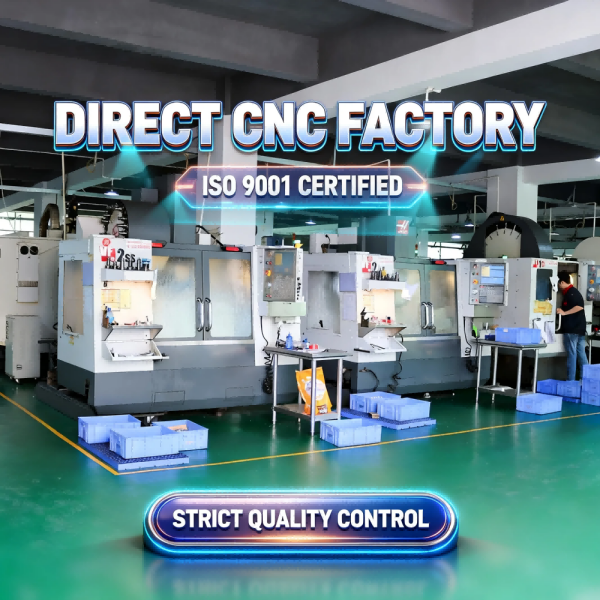
Buyers Are Evaluating Manufacturing Capability, Not Just Unit Price
Many purchasing managers now ask questions that rarely appeared five years ago:
- Can you monitor tool wear digitally?
- Do you collect machine performance data?
- How do you reduce process variation between production batches?
- What systems help prevent scrap before inspection?
These questions reflect a shift in purchasing priorities. The lowest quotation no longer guarantees the lowest manufacturing cost if poor process control leads to delivery delays or inconsistent quality.
My Experience
AI is not replacing experienced machinists—it is giving them better information. Skilled engineers still decide tooling, workholding, and machining strategy, while AI identifies patterns that are difficult to recognize from machine data alone.
The factories gaining the greatest advantage are those combining experienced operators with intelligent monitoring systems. For buyers sourcing carbon steel CNC parts, this often means more stable quality, fewer production interruptions, and a more predictable supply chain rather than simply a lower piece price.