 EN
EN


High-Precision CNC Machining of 1045 Steel Parts
When customers send us drawings for 1045 steel parts, they're usually building automation equipment, conveyor systems, robotic fixtures, or industrial machinery. Five years ago, we saw mostly simple shafts and spacers. Today, many RFQs include servo shafts, locating pins, gearbox components, and precision transmission parts with tolerances of ±0.01 mm or tighter.
1045 has become popular for a simple reason—it sits in the middle. It is stronger than mild steel, considerably less expensive than alloy steels, and after induction hardening it performs well in many moving assemblies. For many automation projects, that's exactly the balance designers are looking for.
One lesson we've learned is that 1045 behaves very differently before and after heat treatment. Several years ago, a batch of drive shafts was finish-machined first and induction hardened later. Although the hardness met specification (about HRC 50-55 on the surface), several shafts showed slight distortion, enough to affect bearing fit during assembly. Since then, we always review the heat-treatment sequence with the customer before confirming the machining process. In many cases, leaving a small grinding allowance after hardening saves both time and scrap.
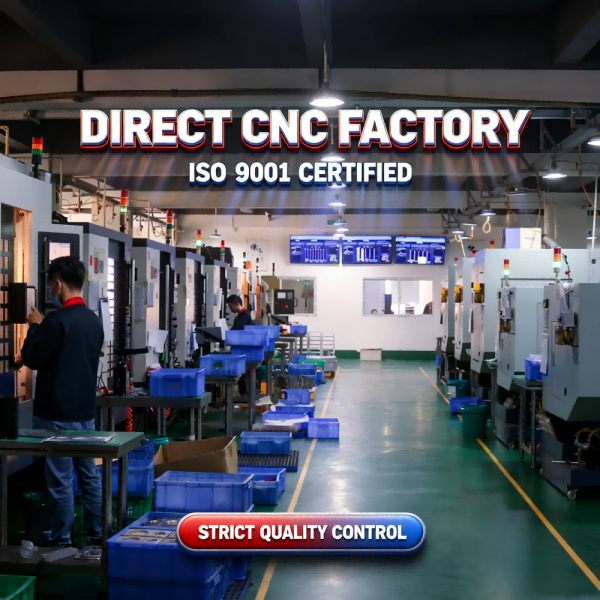
Tool management is another area that rarely appears on quotations but has a direct impact on part accuracy. During long production runs, we've noticed that dimensional variation often begins gradually rather than suddenly. A turning insert may still look usable, yet the shaft diameter starts drifting by 0.005-0.008 mm after hundreds of cycles. Waiting until inspection finds the problem usually means reworking an entire batch. For repeat orders, we replace inserts according to actual cutting history instead of pushing them to their theoretical life.
Surface finish is another point buyers sometimes underestimate. A drawing may simply specify Ra 1.6 μm, but consistently achieving that finish depends on much more than feed rate. Machine rigidity, coolant condition, insert geometry, chucking method, and even bar straightness all influence the final result. We've solved more surface-finish issues by improving workholding than by changing cutting parameters.
This is also why more purchasing managers now ask about process capability instead of only requesting the lowest unit price. They want to know whether machining data is recorded, whether tool wear is monitored, and whether every production batch can maintain the same quality. Those questions matter because assembly lines don't stop when a supplier saves a few cents per part—they stop when one oversized shaft doesn't fit a bearing.
From our perspective, high-precision CNC machining of 1045 steel parts is no longer just about holding tight tolerances. It's about controlling the entire manufacturing process so that the first part and the thousandth part measure the same. That's what automation equipment manufacturers are really paying for.