 EN
EN


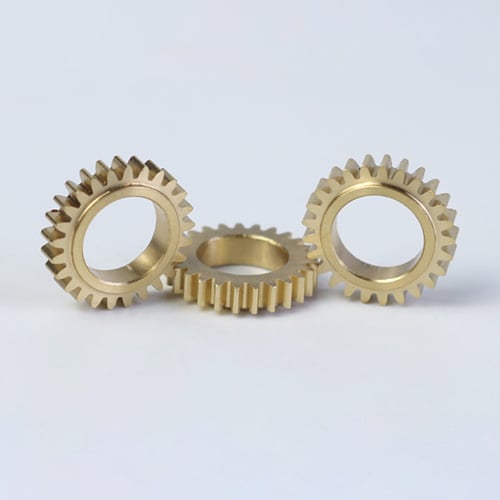
Brass Gear: CNC Turning Hobbing for China Smart Made
In fields such as automotive components, high-end audio equipment, and precision instruments, brass gears, with their excellent wear resistance and good electrical conductivity, have become indispensable core transmission components.
1 Industrial Opportunities in the Current Political Context
At the National People's Congress held in March this year, Zheng Shanjie, Director of the National Development and Reform Commission, clearly stated that China is full of confidence in achieving the economic growth target of around 5%, emphasizing that new quality productive forces are comprehensively transforming production methods.
In 2024, China's GDP grew by 5% year-on-year, with annual new energy vehicle production exceeding 13 million units, ranking among the top of the world's major economies.
Amid the wave of global industrial upgrading, the Ministry of Commerce further emphasized the importance of promoting high-quality consumption and industrial upgrading during the two sessions.
2 Scientific Basis for Material Selection
The reason brass gears hold a place in the field of precision transmission lies in their unique material properties. Brass, a copper-zinc alloy, possesses not only high strength and toughness but also good fatigue resistance and a low coefficient of friction.
In practical applications, this material's self-lubricating properties significantly reduce friction losses in transmission systems, improving equipment operational efficiency.
Especially in applications sensitive to noise, such as high-end audio and precision instruments, the low friction and corrosion resistance of brass gears ensure long-term stable operation.
3 Precision Processing Flow for Brass Gears
By 2025, gear processing technology has entered a new stage of development. According to industry research reports, a systematic brass gear processing flow can be divided into several key stages.
From the initial digital design to the final product verification, each step requires precise control.
• CAD/CAM Design and Programming
The first step in manufacturing brass gears is CAD (Computer-Aided Design) modeling. Based on tracking studies of 47 precision manufacturing projects, this stage accounts for an average of 18% of the process time but holds a high-quality impact score of 9.2 points.
Designers need to consider key parameters such as the gear's modulus, number of teeth, and pressure angle to ensure the final product meets the precise requirements of the application scenario.
• CNC Turning for Rough Machining
Under the guidance of CAM (Computer-Aided Manufacturing) programs, brass rods are fixed on CNC lathes for rough machining.
Cutting tools move precisely along pre-programmed paths, shaping the rods into gear blanks. Research shows that turning is particularly suitable for forming gear blanks with simple shapes and high precision requirements.
• Precision Hobbing Process
Hobbing is the core process in brass gear machining. Using the generating method, the hob and workpiece simulate meshing motion, gradually cutting out the precise tooth profile of the gear.
For small and medium modulus gears, hobbing machines enable high-efficiency, high-precision mass production.
• New Trend of Integrated Machining
With technological advancements, equipment like the newly launched "GE25CF Hobbing and Chamfering Integrated Machine" from Nidec Machine Tool can simultaneously complete hobbing and chamfering on a single machine, significantly improving production efficiency and accuracy.
This type of machine uses a ring loader for workpiece replacement, enabling synchronized hobbing and chamfering operations.
4 Quality Control and Inspection System
The precision of brass gears depends not only on the machining process but also on a strict quality control system. Precise measurements and evaluations are required at multiple stages during processing.
Although the in-process inspection stage accounts for only 7% of the time, its quality impact score is as high as 9.4 points.
The industry widely adopts advanced equipment such as coordinate measuring machines and gear inspection instruments to ensure every product meets international standards.
5 Technological Optimization and Efficiency Improvement
The digital transformation of manufacturing is reflected not only in equipment upgrades but also in process optimization and efficiency gains. According to comparative studies of traditional and optimized workflows, enterprises implementing structured workflows have achieved significant improvements.
The most notable change is a 41% reduction in machine setup time, primarily attributed to standardized procedures and preset tooling systems. Such optimization measures directly reduce non-productive time, enabling companies to respond more flexibly to market demand changes.
The reduction in programming errors is particularly remarkable—by using simulation and verification software, companies have reduced programming errors by 67%. This technological advancement has greatly improved the first-part correctness rate.
6 Policy Direction and Industrial Future
In July 2025, the State Council executive meeting discussed measures to accelerate scenario cultivation and opening, promoting the large-scale application of new scenarios.
The meeting emphasized the need to fully leverage China's advantages of a mega-sized market and abundant application scenarios, focusing on opening scenario resources and conducting pilot verification for innovation.
Furthermore, the State Council executive meeting in October pointed out the need to deepen reforms in key areas and expand institutional openness, enhancing the openness of commodity markets.
These policy directions provide macro-level support for precision manufacturing industries such as brass gears. In today's profoundly evolving international trade landscape, China is connecting with high-standard international economic and trade rules through institutional openness, creating a more favorable development environment for manufacturing.
A brass gear that has completed all processes of "CNC turning + hobbing" slowly rotates under a gear inspection instrument. The test report shows that all indicators—tooth profile error, tooth direction error, and pitch error—are displayed in green, meeting the National Standard Grade 6 accuracy.
This gear will be assembled into a high-end automated device serving the export market. Its transmission smoothness and lifespan will directly impact the international market reputation of the entire machine.
For the global manufacturing industry, the precision machining journey of a brass gear is evolving from a mere manufacturing process into a microcosm of national industrial upgrading and enhanced international competitiveness.