 EN
EN


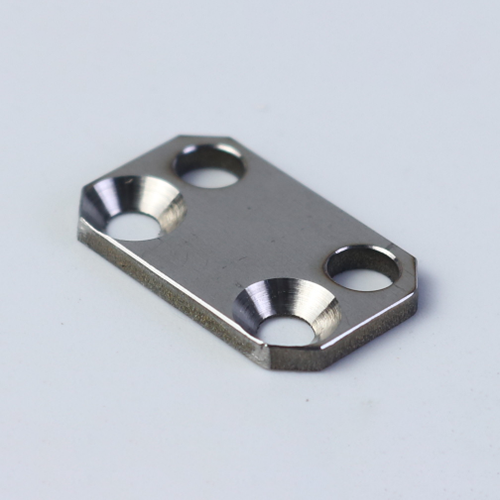
Precision Laser Counterboring for Stainless Steel Equipment
Against the backdrop of the global manufacturing industry's accelerated advancement towards a "zero-defect" precision era, an innovative process that integrates high-precision laser cutting with automated countersunk hole processing is reshaping the quality standards for stainless steel structural components. With the advancement of the EU's "Net Zero Industry Act" and the continuous rise in global investment in semiconductor equipment, this stainless steel processing technology, which is applied in the precise assembly of battery trays, wafer transfer systems and high-end medical equipment, is becoming a key link in the independent control of the advanced manufacturing industry chain.
In traditional stainless steel processing, laser cutting and hole processing are often carried out step by step, resulting in precision loss and efficiency bottlenecks. Recently, leading enterprises in the industry have achieved a 0.1-second process switching and a repeat positioning accuracy of ±0.03mm by developing a "laser-forming integrated workstation". What is more notable is that this technology has overcome the industry problem of easy deformation in the processing of inverted countersunk holes in stainless steel thin plates (0.5-3mm). Through adaptive energy control technology, the heat-affected zone has been reduced to 30% of that in traditional processes, while ensuring a mirror-like effect with a hole wall roughness Ra≤1.6μm. After third-party testing, the 304 stainless steel parts processed by this technology have a verticality deviation of the countertop hole from the plane of no more than 0.05°, fully meeting the high-level assembly requirements of the aerospace AS9100 standard.
Process Innovation: Five-dimensional Intelligent Quality Control System
In response to the increasingly strict zero-defect requirements for structural components in new energy battery modules and semiconductor equipment, this process has established a brand-new intelligent manufacturing chain
Material stress cloud map analysis: Predict the internal stress distribution of the sheet through laser scanning and intelligently plan the cutting path
Multispectral monitoring cutting: Utilizing a dual-band monitoring system of ultraviolet and infrared, the ratio of laser power to auxiliary gas is adjusted in real time
In-machine 3D inspection: Equipped with contact probes and a vision system, it automatically performs reference correction every 5 holes completed
Microstructure analysis: Conduct a 200x magnification inspection of the hole wall to ensure there are no microcracks or remelting layer defects
Assembly simulation verification: Utilizing digital twin technology to rehearse the screw tightening process and optimize the taper design of countersunk holes
Actual production data shows that this system has increased the first-time pass rate of assembly for structural components of new energy battery packs to 99.6%, and reduced the helium leak detection rate of semiconductor vacuum chamber parts to the level of 1×10⁻¹¹ Pa·m³/s.
Industrial Resonance: Three-Dimensional Reconstruction of Supply Chain Value
During the strategic window period when countries are accelerating the construction of localized high-end manufacturing capabilities, this technological innovation is generating a chain reaction:
Green manufacturing breakthrough: By developing waterless cutting technology, the cutting fluid and coolant required in traditional processing have been completely eliminated. The dust removal system jointly developed with a Swiss equipment manufacturer has achieved a collection efficiency of 99.99% for nano-scale metal particles, which is two generations ahead of the new emission standards to be implemented by the European Union in 2024. The annual reduction in hazardous waste treatment by a single production line reaches 18 tons.
Cross-border integration empowerment: This technology has been successfully applied in three emerging fields: hydrogen fuel cell bipolar plate flow channel processing (reducing contact resistance by 40%), core components of wafer transfer manipulators (meeting Class 1 cleanroom standards), and structural frameworks of micro-surgical robots (certified by ISO 13485 medical standards). Especially for the latest "Qilin Battery" three-dimensional cooling system released by CATL, this process has achieved non-destructive processing of 0.15mm ultra-thin separators.
Supply chain resilience construction: By establishing a "digital process library", the processing parameters of over 500 stainless steel grades are modularized, enabling customers to complete the verification of material alternative solutions within 24 hours. In the recent supply chain adjustment of a certain US-funded semiconductor enterprise, this technology helped the client reduce the procurement cycle of key components from 14 weeks to 3 weeks.
Strategic Foresight: From Technological Superiority to Standard Leadership
With the International Organization for Standardization (ISO) about to release a new version of the precision metal parts processing specification, multiple parameters of this innovative process have been included in the draft proposal. It is worth noting that research and development enterprises are collaborating with the Department of Mechanical Engineering of Tsinghua University to develop an "artificial intelligence-based processing defect prediction system". This system can predict potential quality risks 200 milliseconds in advance by analyzing the laser acoustic wave spectrum, achieving true preventive manufacturing.
Industry analysts point out that this technological breakthrough reveals an important trend: in the high-end manufacturing sector, process innovation is shifting from "meeting standards" to "defining standards". At present, this technology has given rise to a "precision insurance" business model - for each batch of parts purchased by customers, a quality commitment underwritten by an insurance company will be provided. If problems arise due to processing accuracy during the assembly process of the parts, a compensation guarantee of up to 200% of the contract amount can be obtained.
In the current context of the deep reconstruction of the global industrial chain, this leap in stainless steel precision processing technology not only demonstrates the technological strength of Chinese manufacturing in climbing to the top of the value chain, but also builds a process moat to deal with the risk of being "strangled". As the latest report from the Fraunhofer Institute in Germany states: "In the next five years, what will determine the competitiveness of high-end equipment manufacturing is no longer the precision of a single device, but the full-chain control capability that runs through materials, processes, and inspection." This innovative integration of laser cutting and countersunk holes is a vivid practice of this full-chain control capability. It provides a brand-new Chinese solution for the global manufacturing industry to pursue definite delivery in an era of uncertainty.