 EN
EN


CNC Machining Steel Parts: Buyer’s Selection Guide
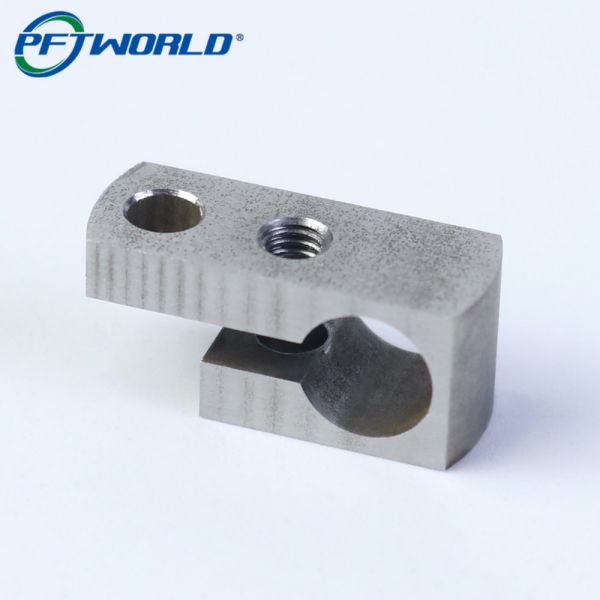
CNC Machining Steel Parts: Buyer’s Selection Guide
Sourcing high-quality CNC machining steel parts is not just about finding the lowest quote. The wrong supplier, process route, or material choice can lead to dimensional failures, excessive tool wear, warped parts, delivery delays, and costly redesigns.
Based on supplier audits, RFQ benchmarking projects, and production qualification programs across automotive, energy, robotics, and industrial equipment sectors, this buyer’s guide explains how to evaluate CNC steel machining suppliers and processes with confidence.
Why a Structured Buying Process Matters
In a recent multi-supplier sourcing comparison for a machined 4140 steel housing:
-
Price differences reached 38%
-
Two of five suppliers failed flatness tolerance
-
Tooling cost per part varied 2.4×
-
Lead time ranged from 2–8 weeks
Only one supplier passed dimensional capability, documentation, and scalability requirements.
Step 1: Define Your Part Requirements Clearly
Before requesting quotes, prepare:
-
✅ 2D drawings with GD&T
-
✅ 3D CAD files
-
✅ Annual volumes and forecast
-
✅ Steel grade and hardness range
-
✅ Heat-treatment specs
-
✅ Surface finish and coating
-
✅ Inspection level (FAI, PPAP, CpK)
Incomplete RFQs lead to inaccurate pricing—and production risk.
Step 2: Choose the Right Steel for CNC Machining
Confirm whether carbon, alloy, or stainless steel is appropriate:
| Requirement | Recommended Option |
|---|---|
| Low cost, dry environment | 1018 / 1045 |
| High strength | 4140 PH |
| Wear surfaces | 8620 carburized |
| Corrosion resistance | 316 / 17-4 PH |
| Tight tolerances post-HT | Pre-hard alloy steel |
Ask suppliers if coatings can replace stainless to reduce cost.
Step 3: Evaluate Machining Capability—not Just Equipment Count
Key questions:
-
Do they run 5-axis machines for complex parts?
-
Can they hold ±0.01 mm routinely?
-
Do they perform in-process probing?
-
What tooling brands and coatings are used?
-
How is tool life tracked?
Request examples of similar steel components they’ve produced.
Step 4: Inspect Process Controls and Data
Top suppliers track machining performance:
-
SPC charts on critical dimensions
-
Tool-life logs
-
Thermal control practices
-
Fixture repeatability studies
-
CpK reports (>1.33 preferred)
Avoid shops that rely purely on manual offset tweaking.
Step 5: Understand the Cost Breakdown
Ask for a transparent cost model:
-
Raw material
-
Machining hours
-
Tooling consumption
-
Heat treatment
-
Finishing
-
Inspection
-
Scrap allowance
This exposes unrealistic quotes that may lead to quality problems later.
Step 6: Prototype Before Full Production
Run a pilot lot:
-
First Article Inspection (FAI)
-
Dimensional capability study
-
Tool-life validation
-
Surface-finish verification
-
Heat-treatment distortion check
One OEM reduced production rejects by 41% by insisting on a pilot run before ramp-up.
Step 7: Check Certifications and Traceability
For regulated industries, confirm:
-
ISO 9001 / IATF 16949 / AS9100
-
Material Test Reports (MTRs)
-
Heat-treat certificates
-
Coating certs
-
Lot traceability
Supplier Evaluation Checklist
Before awarding business:
-
✅ Can hold required tolerances
-
✅ Provides machining data
-
✅ Controls distortion
-
✅ Tracks tool wear
-
✅ Has heat-treat partners
-
✅ Offers DFMA feedback
-
✅ Supports scale-up
Common Buyer Mistakes to Avoid
❌ Selecting lowest price without capability review
❌ Ignoring material hardness range
❌ Skipping pilot runs
❌ Not verifying fixturing strategy
❌ Over-tightening tolerances unnecessarily
FAQs: Buying CNC Machined Steel Parts
What tolerance should I specify?
Only tighten where function requires—over-specification increases cost.