 EN
EN


Global manufacturing shifts to high-precision custom processing
As the global manufacturing supply chain has accelerated its optimization and adjustment after the pandemic, the demand for precision processing and customized components has entered an unprecedented growth cycle. Recently, with the significant increase in the purchasing intentions of high-performance mechanical components in the markets of Europe, the United States, and Southeast Asia, a high-precision positioning plate product based on aluminum material has attracted industry attention. This product, with its outstanding dimensional stability and fine processing technology, has become a highlight in the growth of orders in the fields of intelligent manufacturing and robot equipment.
Due to the easing of the international trade environment and the supportive policies of various countries for high-end manufacturing industries, more and more enterprises are shifting from the traditional large-scale purchase of standard components to "small-batch diversified" customized numerical control processing services. This trend is not only reflected in the field of industrial automation, but also extends to specialized markets with strict requirements for part quality, such as aerospace, precision medical equipment, and new energy equipment.
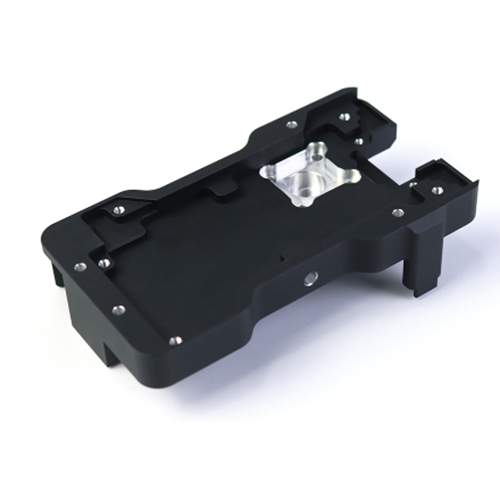
As a typical example, this positioning plate is made of high-quality aluminum as the base material. The complex geometric shapes are precisely formed through CNC machining technology. The entire processing procedure includes key steps such as initial milling, hole blocking treatment, full surface sandblasting, matte black oxidation enhancement, and secondary precision milling. The sandblasting and matte black oxidation treatment not only enhance the product's corrosion resistance but also ensure the friction performance and assembly compatibility. With a processing tolerance of ±0.01 millimeters and uniform surface treatment effect, this positioning plate performs exceptionally well in high-precision positioning and high-repetition motion control scenarios.
Industry analysts point out that the global manufacturing industry currently faces two core challenges: supply chain stability and green environmental pressure. Therefore, when choosing processing suppliers, enterprises tend to look for partners that possess digital manufacturing capabilities, a mature quality control system, and flexible delivery cycles. Precision aluminum positioning plates precisely embody this processing capability: from numerical control programming, fixture design to the collaborative production of multiple processes, each step relies on highly automated and intelligent equipment support, which is highly consistent with the industrial policy direction of "intelligent manufacturing upgrade" emphasized by manufacturing powers such as Europe, the United States, and Japan at present.
Meanwhile, the promotion of the green manufacturing concept has also encouraged enterprises to be more cautious in their material selection and processing methods. Aluminum, due to its light weight, high strength, and recyclability, is widely used in modern industrial design. Combined with surface treatment processes such as sandblasting and oxidation, it not only meets mechanical performance requirements but also has a lower environmental load, which aligns with the global carbon neutrality goal. The purchasing manager stated: "When considering the procurement of parts, in addition to performance and delivery cycle, we are increasingly emphasizing the environmental performance of the supply chain."
As the global order focus shifts towards high-precision and high-value-added components, the market demand for such positioning plates is expected to continue to rise. Especially in fields such as robot vision systems, precision assembly lines, and automatic inspection equipment, extremely high requirements are placed on positioning accuracy and stability, which directly drives the market value of customized processing capabilities.
Overall, from the recovery of international supply chains, the policy support for intelligent manufacturing, to the implementation of green development concepts, multiple political and industrial hotspots have jointly driven the growth in demand for precision CNC aluminum parts. This also means that manufacturing buyers will increasingly emphasize the comprehensive performance of suppliers in terms of technical strength, handling of complex processes, and quality consistency in their procurement strategies. For procurement decision-makers, efficient, flexible, and sustainable processing solutions are becoming important criteria for future cooperation choices.